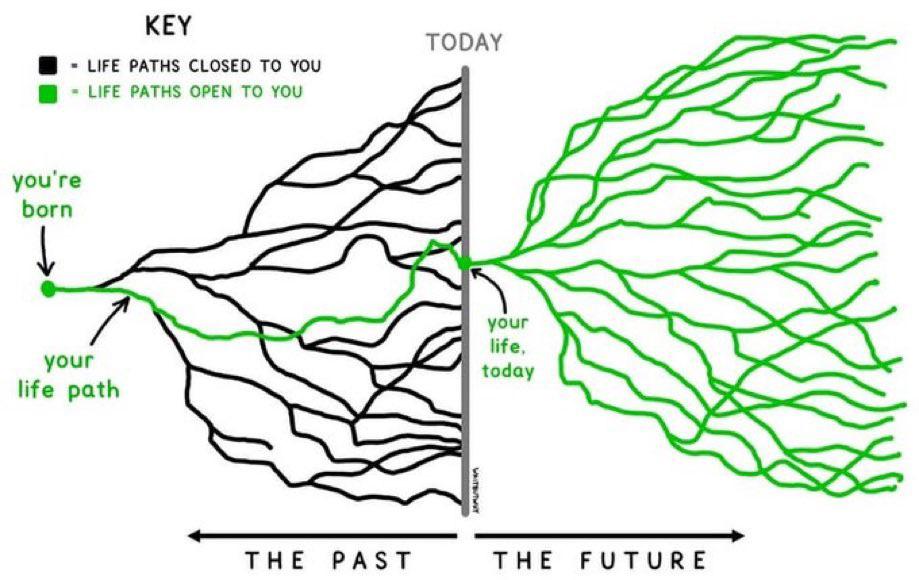
This is a secret power.
We have all felt the boost of creativity once we lay down, or right when we wake up. There’s science behind this, we all do it automatically, but with awareness and intention you can harness this secret power to boost your creative connection and output to consistently high levels.
The DMN (Default Mode Network) is a network of interconnected brain regions that becomes active when you’re not focused on the external world—essentially, when your mind is at rest, daydreaming, reminiscing, or engaging in self-reflection. It plays a key role in creativity, introspection, and imagination but can also contribute to overthinking, anxiety, and rumination if not balanced properly.
Key Functions of the DMN
- Mind-Wandering & Daydreaming – The DMN activates when you’re not engaged in a task, allowing thoughts to drift freely.
- Self-Reflection & Identity – It helps in understanding who you are, forming a sense of self, and recalling past experiences.
- Creativity & Problem-Solving – Many creative breakthroughs occur when the DMN is engaged, as it connects ideas in unique ways.
- Autobiographical Memory – It retrieves and processes personal memories, shaping your life narrative.
Balancing the DMN
Since excessive DMN activity can lead to overthinking or mental fatigue, balancing it with the Task-Positive Network (TPN) (which activates during focused tasks) is essential. Mindfulness, meditation, and engaging in structured activities can help regulate its activity to avoid getting stuck in loops of rumination.
So of course everyone is different and everything works differently for everyone, so experiment to find best results. I would love to make a step by step, “sure thing” universal guide that fits everyone, but rarely is anything so black and white. That being said, I personally have found great results with the following modulation techniques;
- Showering — The shower is one of the most sacred of meditative spaces, when used wisely. Just the act of cleansing the body, for me, has always been an act of washing away any negative energy, providing a fresh start. Literally cleaning up your vibe lol. I do a series of meditations and movements that have proved helpful.
- Encourages Mind-Wandering & Creativity
- The warm water, white noise, and repetitive motions create a relaxed yet alert state, ideal for DMN-driven idea generation. Many people experience “shower thoughts” because the brain enters a state where subconscious connections form more easily.
- Relaxes the Nervous System
- Warm showers stimulate the parasympathetic nervous system (rest & digest), reducing stress and overactive rumination from an unchecked DMN.
- This allows for a healthy balance between internal thought and external awareness.
- Activates Dopamine & Novelty Processing
- The soothing sensory experience of a shower (temperature shifts, water flow) increases dopamine, which is key for insight and creative problem-solving.
- Dopamine also enhances fluid thinking, making it easier to connect ideas that seemed unrelated before.
- Creates a Mini-Meditative State
- The sensory isolation (limited distractions, enclosed space) mimics some effects of meditation, letting the DMN work efficiently without overstimulation.
- The repetition of showering (lathering, rinsing) can act as a focus anchor, reducing DMN-driven overthinking.
- Let your mind wander: Don’t force ideas—let them surface naturally.
- Use warm water: Helps relax the body and engage the DMN in a non-anxious state.
- Try contrast showers: Switching between hot and cold can increase alertness, shifting between the DMN and task-positive networks.
- Incorporate mindfulness: Focusing on the feeling of water can reduce excessive rumination if needed.
- Bring a waterproof notepad or voice recorder: Many creative ideas emerge in the shower—capture them before they fade.
- Encourages Mind-Wandering & Creativity
- Meditating — While some meditation is about clearing the mind, and while that has its own benefits for creativity, there are also forms of mediation that focus on mind wandering. I like what I call everything everywhere all at once, or the web of life meditation.
- Reduces DMN Overactivity (Quieting the Inner Chatter)
- Meditation, especially focused attention (FA) meditation (e.g., breath awareness), decreases self-referential thoughts and rumination, which are linked to excessive DMN activity. Studies show that experienced meditators have reduced activity in the DMN, leading to less mind-wandering, improved focus, and reduced anxiety.
- Strengthens Connectivity Between the DMN and Executive Networks
- Meditation enhances the connection between the DMN and the central executive network (CEN), improving the brain’s ability to switch between introspection and present-moment awareness.
- This helps regulate thoughts more effectively, preventing getting stuck in loops of overthinking.
- Mindfulness Meditation Alters the DMN’s Default State
- Mindfulness meditation (observing thoughts without attachment) allows the DMN to function without being hijacked by negative or repetitive thinking.
- Regular practice leads to a more balanced DMN, where thoughts arise but don’t dominate awareness.
- Enhances Insight & Creativity (DMN in a Controlled State)
- Open-monitoring meditation (observing thoughts freely) keeps the DMN slightly engaged but not intrusive, creating an ideal state for creative breakthroughs.
- Many artists, writers, and thinkers use meditation to access insights without forcing them.
- Deep Meditation Can Suppress the DMN Almost Entirely
- In non-dual awareness, transcendental meditation, or deep states of samadhi, the DMN can become almost silent, leading to states of ego dissolution and deep presence.
- This extreme modulation creates a profound sense of oneness, timelessness, and detachment from self-referential thinking.
- Best Meditation Practices for DMN Modulation
- Focused attention (breath, mantra) → Quiets excessive DMN activity.
- Mindfulness (observing thoughts) → Balances DMN without suppression.
- Open-monitoring (creative reflection) → Encourages controlled idea generation.
- Deep meditation (non-dual, samadhi, NSDR) → Can fully suppress DMN for deep presence.
- Reduces DMN Overactivity (Quieting the Inner Chatter)
- Driving — Ever notice how you sort of drift off when driving, its a troubling thought on paper, but in practice driving routine routes is a great scenario that balances the DMN and TPN in a way that provides an optimal space for mind wandering.
- Engages the DMN During Automatic Driving
- The warm water, white noise, and repetitive motions create a relaxed yet alert state, ideal for DMN-driven idea generation. Many people experience “shower thoughts” because the brain enters a state where subconscious connections form more easily.
- Suppresses the DMN During Complex Driving
- In high-traffic, unfamiliar, or challenging driving conditions, the Task-Positive Network (TPN) becomes dominant.
- The TPN is responsible for focus, reaction time, and situational awareness, suppressing the DMN to prevent distractions.
- Boosts Creativity on Open Roads
- Long, relaxed drives on open highways (with minimal traffic) create an ideal balance between light cognitive engagement and mind-wandering, which enhances creativity.
- The rhythmic motion, engine hum, and road scenery act as a sensory backdrop, similar to how showers or walking stimulate creative thinking.
- Promotes Problem-Solving Through Subconscious Processing
- Driving can put you in a flow state, where your conscious mind is occupied just enough to let deeper ideas surface.
- Many people experience “aha moments” during solo drives because their brains are free to process problems in the background.
- Best Ways to Optimize Driving for DMN Modulation
- Take scenic or familiar routes: Reduces cognitive load, allowing the DMN to activate.
- Drive alone (or with minimal conversation): Encourages deeper introspection and creative insights.
- Avoid overstimulation (e.g., loud music or podcasts): Silence or ambient sounds help ideas flow.
- Use voice memos to capture insights: Since writing isn’t an option, recording ideas keeps them from getting lost.
- Be mindful of safety: If your mind wanders too much, engaging in active observation can help rebalance focus.
- Engages the DMN During Automatic Driving
- Exercising — A simple walk thru the woods does wonders for a wizard.
- Reduces Overactivity of the DMN
- Walking, especially in nature or engaging environments, can shift attention outward, reducing rumination and excessive self-referential thinking (common in an overactive DMN).
- Studies show that aerobic exercise, like walking, decreases DMN connectivity, helping break repetitive thought loops.
- Enhances Creativity & Idea Generation
- Walking increases functional connectivity between the DMN and executive control networks, allowing for better idea incubation without getting lost in distraction.
- Many famous creatives, like Nietzsche and Steve Jobs, used walking as a tool to enhance creative thinking.
- Regulates Mood & Reduces Stress
- Walking in green spaces or natural environments engages the task-positive network (TPN) and reduces DMN hyperactivity linked to anxiety and depression.
- Movement increases dopamine and serotonin, which can balance excessive inward focus.
- Induces a Meditative State
- Rhythmic walking (especially without distractions) can create a flow-like state, where DMN activity shifts toward a healthy balance between self-reflection and external awareness (similar to mindfulness).
- Walking meditation (like in Zen practices) is specifically designed to engage the DMN in a more controlled, intentional way.
- Reduces Overactivity of the DMN
- Psychedelics — Everybody’s favorite. These have helped me tremendously. Ill leave you to research, click the “drug guide” under “human experience”.
- Resting — When you rest, not only does your brain have more power from not doing external tasks, but more power from not having to perform internal tasks such as maintaining posture, with all this mind power freed up, it can finally run wild.
- Passive Rest (Daydreaming & Mind-Wandering)
- When you’re resting without structured activity, the DMN becomes highly active, leading to introspection, memory recall, and spontaneous thoughts.
- This is why moments of doing nothing often bring insights, problem-solving, and creativity.
- Deep Rest (Meditation, NSDR, Yoga Nidra)
- Practices like meditation and NSDR shift the DMN into a more controlled state, balancing mind-wandering with presence.
- Research shows that meditation reduces excessive DMN activity, helping prevent overthinking and rumination while still allowing for creative insights.
- Resting in Nature or Low-Stimulation Environments
- Being in a quiet, natural setting (like sitting by a lake or lying on a hammock) encourages healthy DMN activation, leading to a relaxed yet creative state.
- Low-stimulation environments help the DMN cycle between active reflection and mental quiet, preventing overactivity.
- Rest-Induced DMN Overactivity (If Unstructured)
- If rest is accompanied by excessive rumination, the DMN can become hyperactive, leading to stress, anxiety, or intrusive thoughts.
- This is common when people lie down to rest but feel overwhelmed by racing thoughts.
- How to Optimize Rest for DMN Modulation
- Structured rest (meditation, NSDR, deep breathing) → Promotes DMN balance and mental clarity.
- Creative rest (lying down, daydreaming, light music) → Supports idea generation and insight.
- Nature-based rest → Engages the DMN in a healthy, calming way.
- Avoid overstimulated rest (doomscrolling, TV, or background distractions) → Can prevent deep mental relaxation.
- Passive Rest (Daydreaming & Mind-Wandering)
- Sleeping — Right before you fall asleep, while your asleep and dreaming, and right after you wake up are prime times for creative connection to be at its strongest. Many great thinkers of the past, like Tesla and Da Vinci, utilized these states to boost creativity and problem solving.
- Dalí, the surrealist painter, used a technique where he would hold a key (not an apple) while sitting in a chair. Underneath, he placed a metal plate. As he drifted into the hypnagogic (half-dream) state, his hand would relax, dropping the key onto the plate and waking him up. This allowed him to access the dreamlike, subconscious imagery right on the edge of sleep—fueling his surreal artwork.
- Thomas Edison used a similar trick but with steel balls in his hands, which would drop onto the floor as he nodded off, waking him up with fresh insights.
- DMN Activity Persists During Sleep
- Unlike other brain networks, the DMN remains active even during sleep, but its patterns change depending on the sleep stage. It plays a key role in memory consolidation, emotional processing, and dream formation.
- DMN is Suppressed During Deep Sleep (NREM Stages 3 & 4)
- In slow-wave sleep (deep sleep), DMN activity significantly decreases, allowing the brain to recover from excessive mind-wandering and self-referential thinking.
- This stage is essential for mental clarity, reduced anxiety, and cognitive reset.
- DMN is Highly Active During REM Sleep (Dreaming Stage)
- In REM sleep, the DMN becomes highly engaged, similar to wakefulness, but with less input from the executive control network.
- This allows for bizarre, vivid, and creative dreams, as the brain freely connects ideas without logical constraints.
- REM sleep is crucial for problem-solving, creativity, and emotional processing.
- Sleep Deprivation Leads to DMN Dysregulation
- Lack of sleep causes overactivity of the DMN, leading to excessive rumination, mind-wandering, anxiety, and difficulty focusing.
- Poor sleep quality is linked to mental disorders like depression, where an overactive DMN plays a significant role.
- Optimizing Sleep for DMN Modulation
- Prioritize deep sleep: Helps reset excessive DMN activity and improves cognitive function.
- Enhance REM sleep: Can boost creativity and emotional processing (lucid dreaming practices may help).
- Avoid sleep deprivation: Reduces DMN overactivity that leads to intrusive thoughts and poor focus.
- Use naps wisely: Short naps (~20 min) engage light sleep, while longer naps (~90 min) allow for some REM activity, which can enhance creativity.
Now the secret is to apply these modulation techniques to a polyphasic schedule to maintain optimal levels throughout the day, a secret power to tapping into the creative force.